Coral reefs and rocky areas in the tropical Indo-Pacific.
Distribution
Widespread in the tropical Indo-Pacific region, including the Red Sea and the eastern coast of Africa to the Marquesas Islands.
Conservation status
Least Concern
Edibility
Edible and occasionally used as food, but ciguatera poisoning is a potential risk in some tropical areas. Consumption guidance and harvest restrictions vary locally.
Culinary quality / 5
3
Danger level
Harmless
Usual observation depth
3–40 m
Lifespan (years)
20
Behaviour
Most often observed alone or in pairs. Adults defend territories on reefs and are mainly active during the day. Juveniles are inconspicuous, highly territorial, and generally remain near sheltered crevices.
Observation zones
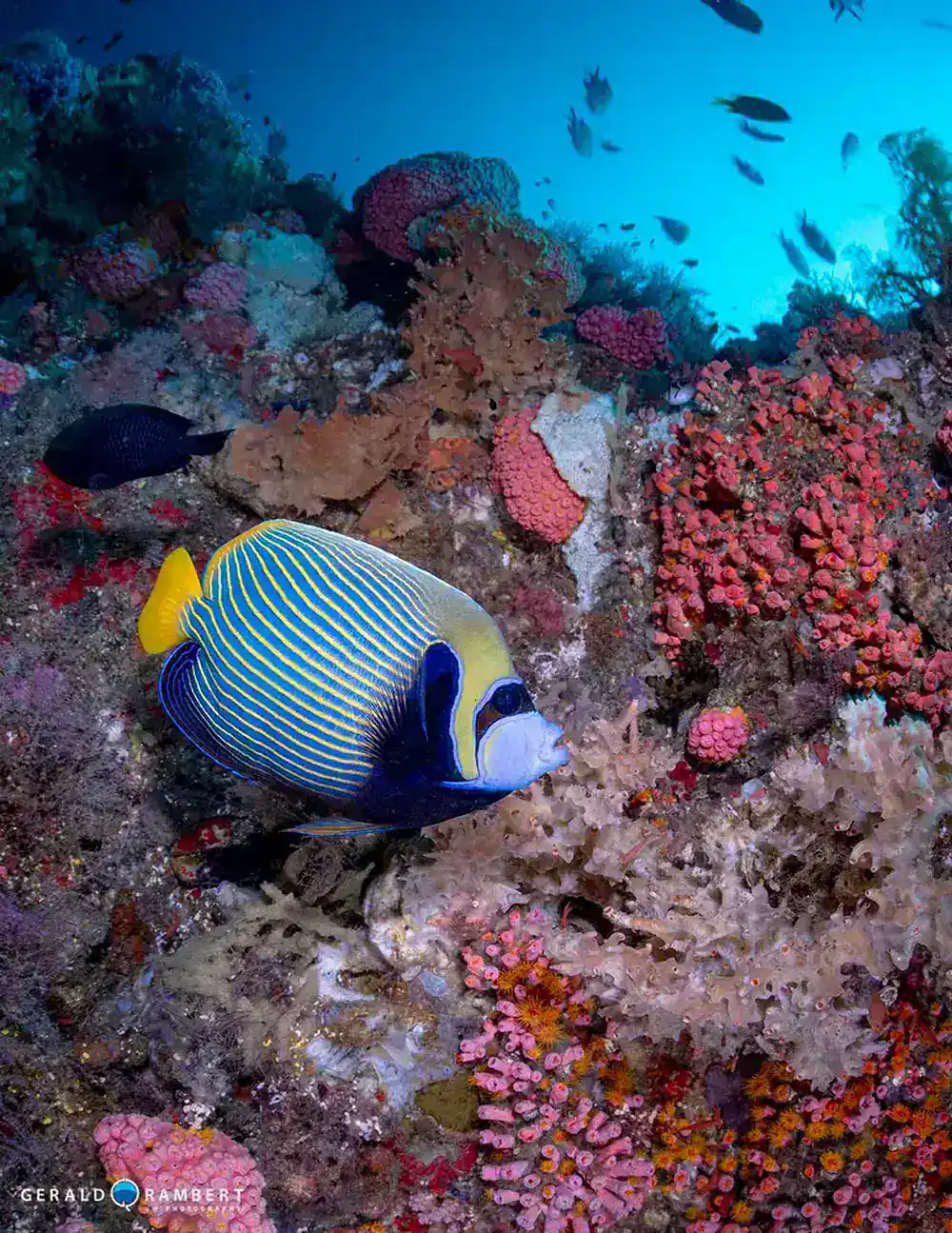
Coral reef, lagoon, reef slope, pass, drop-off, crevice and cave entrance; juveniles are found mainly under overhangs or in sheltered reef structures.
Diet
Mainly sponges and tunicates, supplemented by algae, bryozoans and other sessile benthic invertebrates.
Reproduction
Oviparous
Identification marks
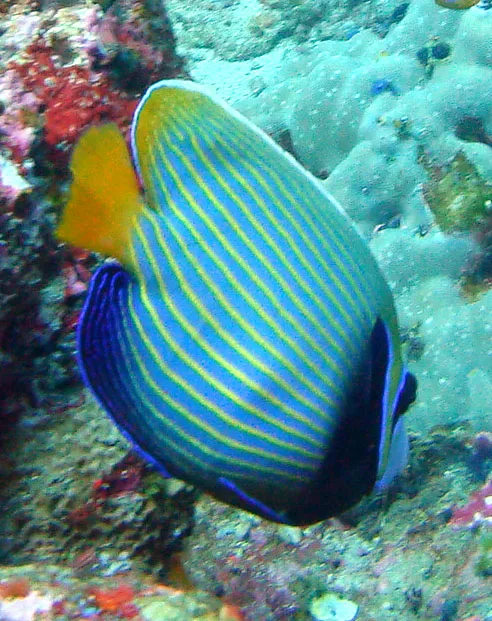
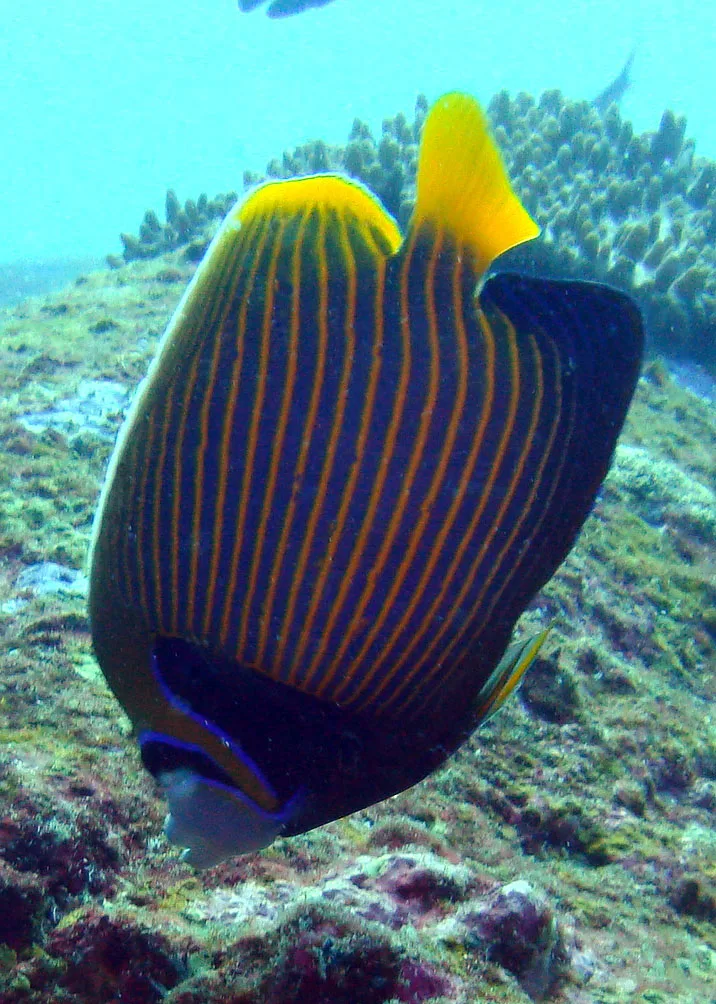
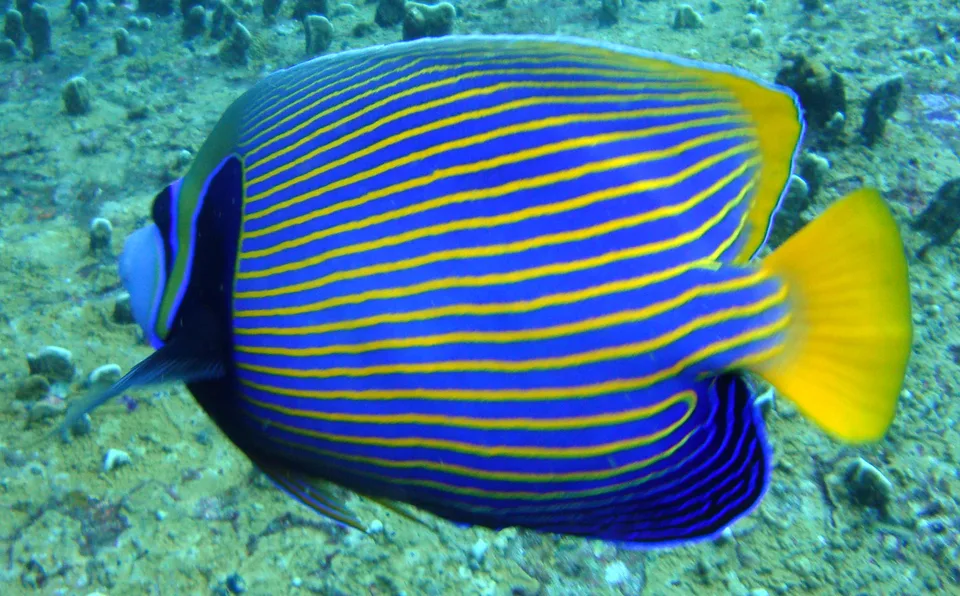
Large angelfish with a deep body. Adults have bright blue and yellow horizontal stripes, a dark blue face with a light mask around the eye, and a bright yellow tail. Juveniles are dark blue to black, with curved concentric white and electric blue bands.
Similar species
Juveniles may be confused with those of the semicircle angelfish (Pomacanthus semicirculatus), which has a dark body with similar curved pale bands. Adult emperor angelfish are distinguished by their distinct horizontal blue and yellow stripes and yellow tail; adults of P. semicirculatus are more uniformly blue-green with blue spots.
Approach rules
Approach slowly and calmly from the side, leaving the fish a clear escape route toward the reef. Keep a respectful distance, especially near juveniles in crevices. Do not touch, chase, corner, or feed it. Avoid repeated use of flash at close range.
Protection
Globally assessed as Least Concern on the IUCN Red List. It is not listed in the CITES Appendices. Conservation of reef habitats and responsible collection for the aquarium trade are important general measures.