Rocky reefs, walls, overhangs and caves where its preferred sponge prey grows.
Distribution
Mediterranean Sea and nearby northeastern Atlantic waters, notably around the Iberian Peninsula and Macaronesian islands.
Conservation status
Least Concern
Edibility
Not regarded as food. Do not consume; sea slugs may contain defensive compounds obtained from their sponge diet.
Danger level
Harmless
Usual observation depth
5–30 m
Lifespan (years)
0
Behaviour
A slow-moving benthic nudibranch, usually seen alone or in small groups on food sponges. It is a simultaneous hermaphrodite and lays ribbon-like egg masses.
Observation zones
Reef, rocky wall, overhang, cave entrance and sponge-covered hard bottom.
Diet
Specialist sponge feeder, particularly associated with the violet sponge Petrosia ficiformis.
Reproduction
Oviparous
Identification marks
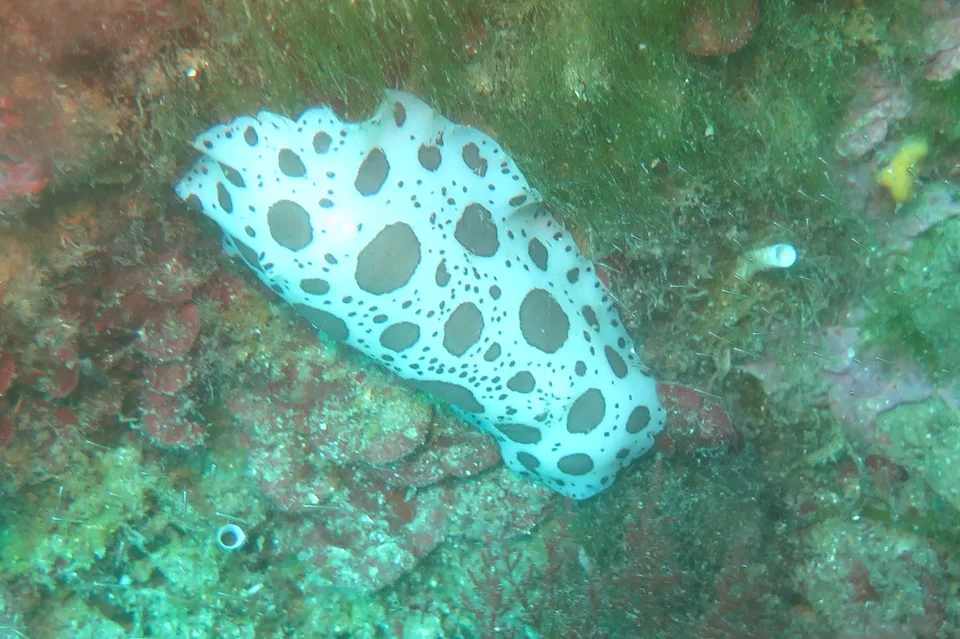
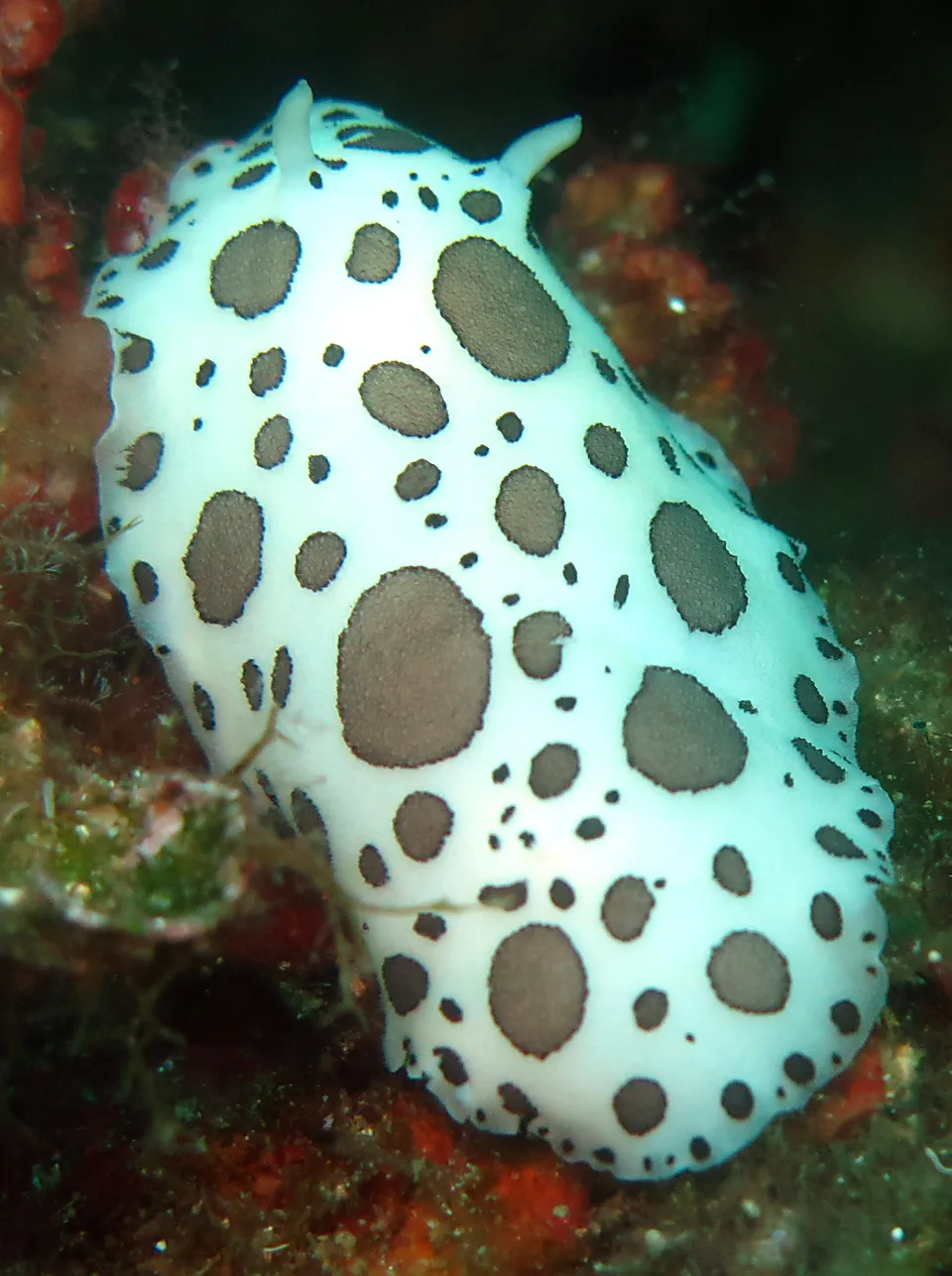
Large, oval, flattened mantle; creamy white to pale yellow background with distinct irregular dark brown or black spots; six feathery gills form a circle around the rear anus.
Similar species
Often confused with other pale, spotted dorid nudibranchs. Peltodoris atromaculata is distinguished by its broad flattened body, conspicuous dark spots, six gills, and close association with Petrosia ficiformis; coloration and spot pattern can vary.
Approach rules
Observe without touching, collecting, moving, or feeding it. Keep good buoyancy to avoid damaging the animal and its sponge habitat; avoid flash photography at very close range.
Protection
Globally assessed as Least Concern by the IUCN. It is not listed in CITES; protect individuals and their sponge habitat from disturbance and collection.