Not normally eaten. Its small size offers no practical culinary value; do not collect wildlife without checking applicable local rules.
Danger level
Harmless
Usual observation depth
?–20 m
Behaviour
Generally solitary and discreet, it hides under rocks or among algae during the day and becomes more active at night. It can regenerate lost arms.
Observation zones
Rocky reef, tidal pool, kelp or algal cover, seagrass bed and sheltered shallow rocky areas.
Diet
Opportunistic omnivore and scavenger, consuming biofilm, detritus, small sessile invertebrates and carrion.
Reproduction
Oviparous
Identification marks
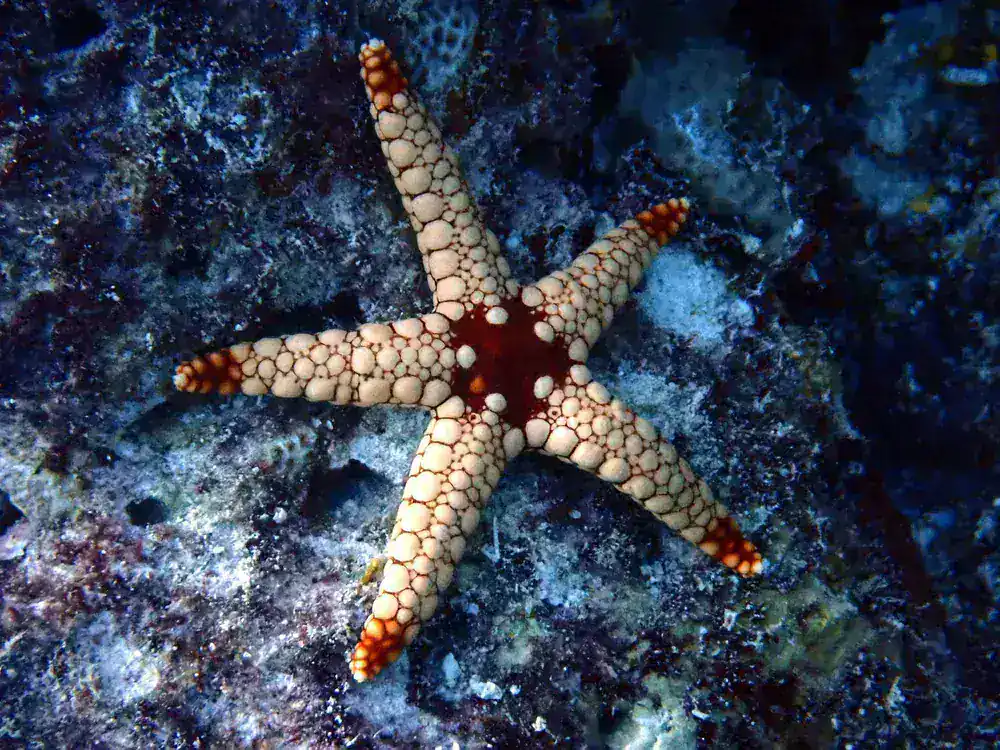
Small, stout starfish, generally with five arms and a pentagonal outline. The upper surface bears conspicuous, low, rounded tubercles and variable brown, olive, greenish, reddish, or mottled coloration.
Similar species
May be confused with other small starfish of the Asterina type. Reliable identification is difficult from photographs alone; arm shape, dorsal plates, habitat and reproductive biology may be necessary to distinguish closely related species.
Approach rules
Observe without touching, lifting, or turning over the animal. Keep fins and equipment away from the substrate, avoid repeated close-range flashes, and do not feed it.
Protection
No CITES listing is known. In practice, treat it as a wild animal to be protected: avoid disturbance and collection, and consult the regulations applicable to the site and locally.