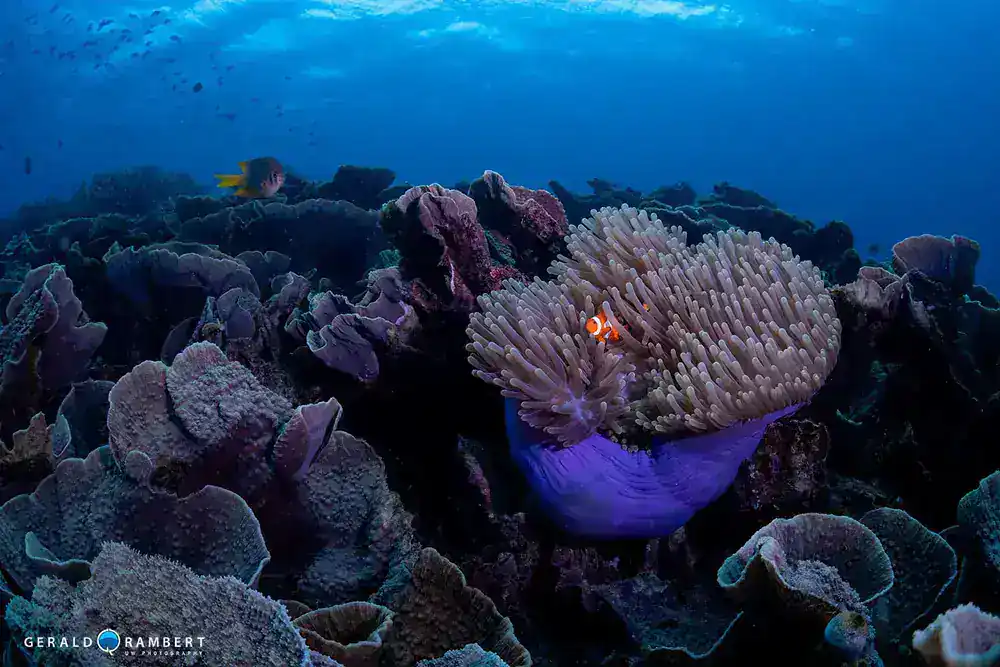
Technically edible, but it is very small and not generally used as food. Do not collect wild reef or aquarium fish for consumption.
Culinary quality / 5
1
Danger level
Harmless
Usual observation depth
1–15 m
Behaviour
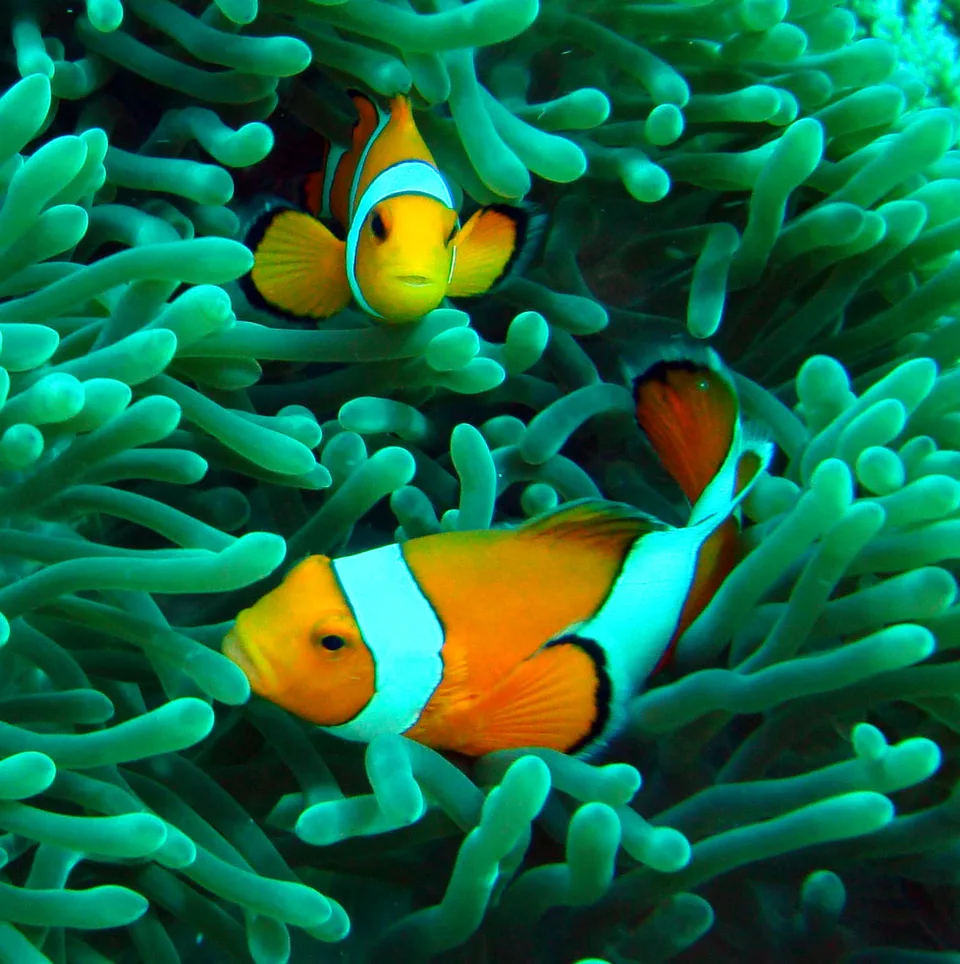
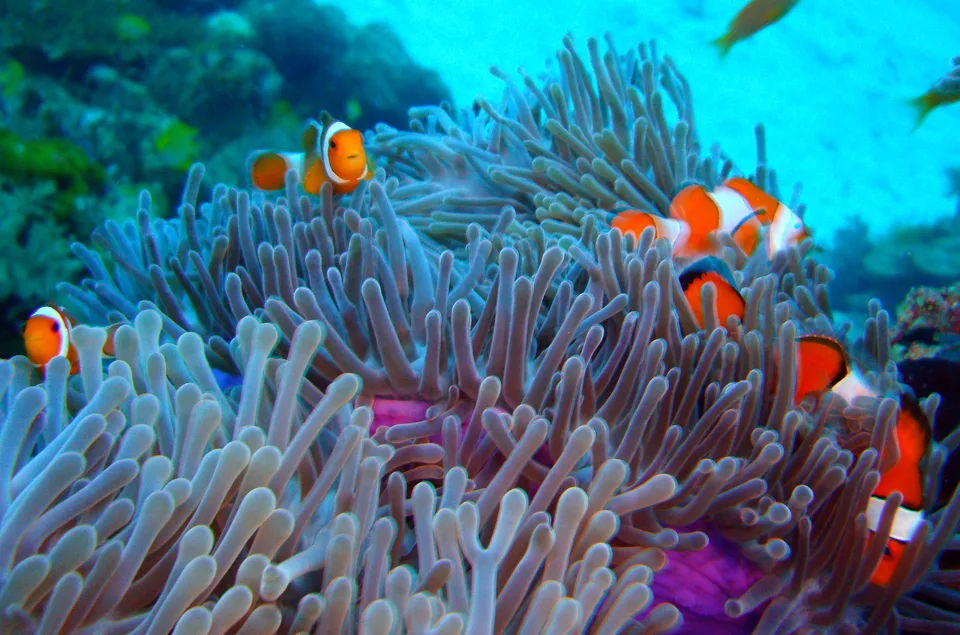
Diurnal, territorial and social fish living in a small group in a host anemone. Groups follow a size-based hierarchy: the largest individual is the breeding female, followed by a breeding male and smaller non-breeding individuals. It may vigorously defend its anemone.
Observation zones
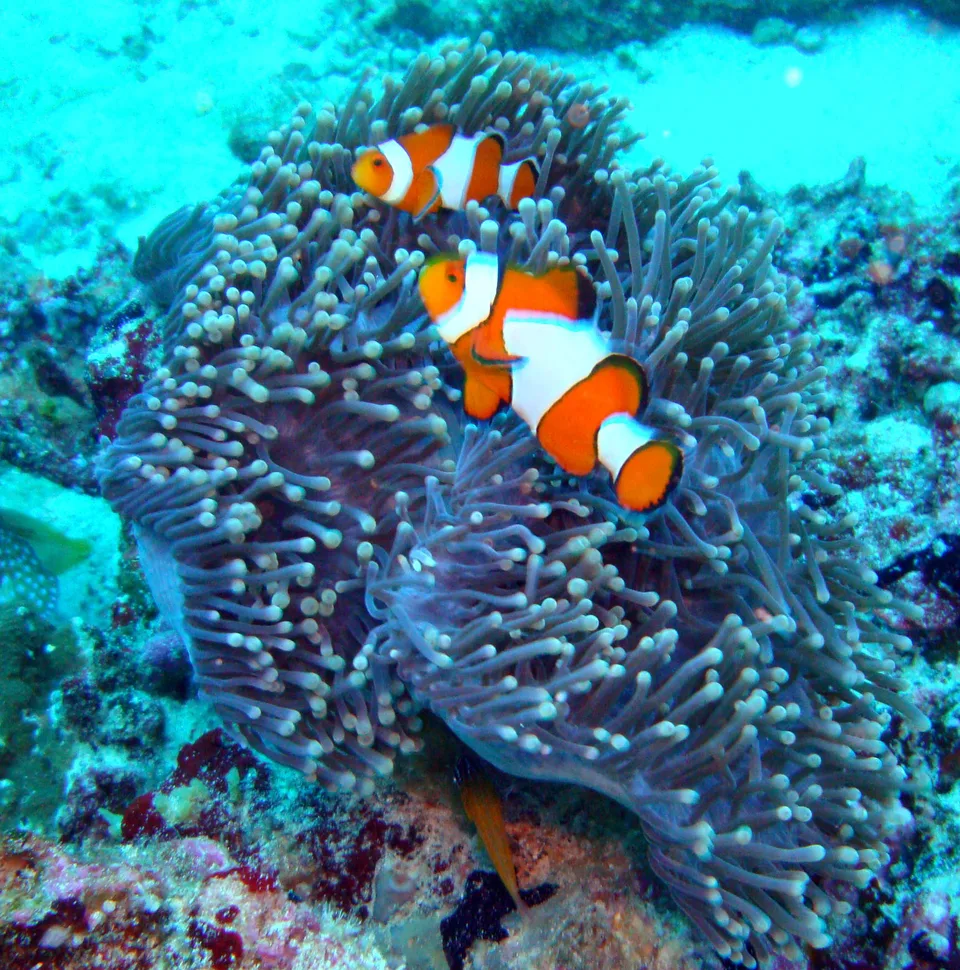
Shallow reef, lagoon and sheltered coral garden zones; generally directly among the tentacles of a host anemone.
Diet
Omnivore feeding mainly on zooplankton, small benthic crustaceans, algae, and organic matter near its host anemone.
Reproduction
Oviparous
Identification marks
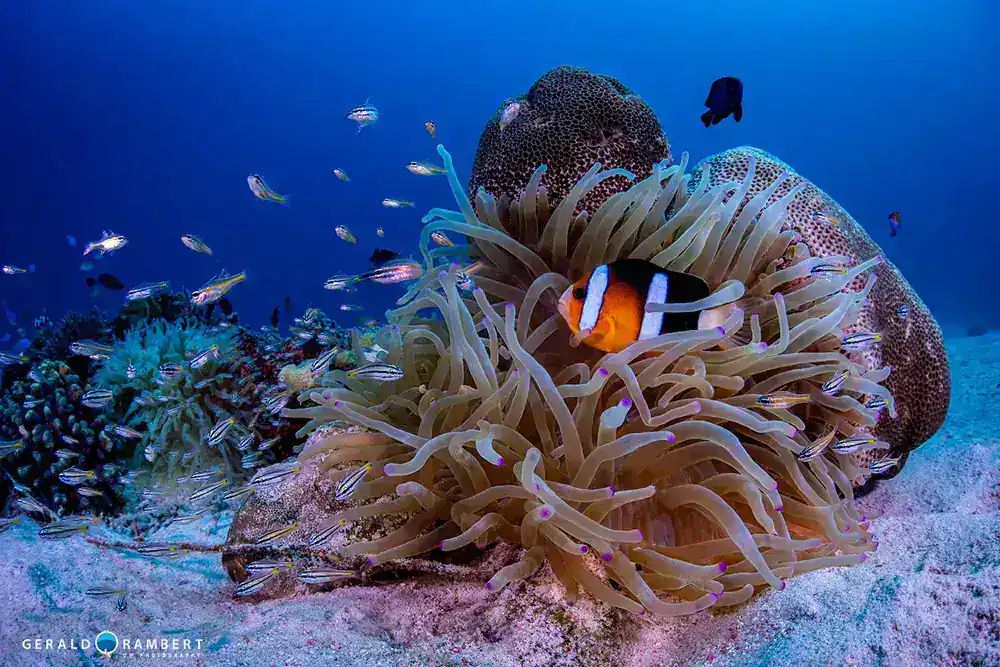
Orange to reddish-orange body with three vertical white bars, generally edged with a fine black border. The first is behind the eye, the second crosses the body, and the third is at the base of the tail. The fins are orange with dark margins; some populations are largely black.
Similar species
Often confused with the percula clownfish (Amphiprion percula). A. percula generally has broader black margins around the white bars and usually has 9 to 10 dorsal spines, compared with generally 10 to 11 in A. ocellaris. Color alone is not reliable, as black forms of A. ocellaris exist.
Approach rules
Observe calmly from a respectful distance and avoid blocking the fish’s access to its anemone. Never touch or handle the host anemone or the surrounding corals, and do not lean on them. Avoid using flash and do not feed the fish.
Protection
Globally assessed as Least Concern (LC) on the IUCN Red List and not listed under CITES. Protect reefs and host anemone habitat; where applicable, favor aquarium specimens from responsible and sustainable sources.