Edible, but it is a small reef fish and is not generally a food target. Consumption is not recommended where reef-fish ciguatera risk is known.
Culinary quality / 5
2
Danger level
Harmless
Usual observation depth
1–30 m
Behaviour
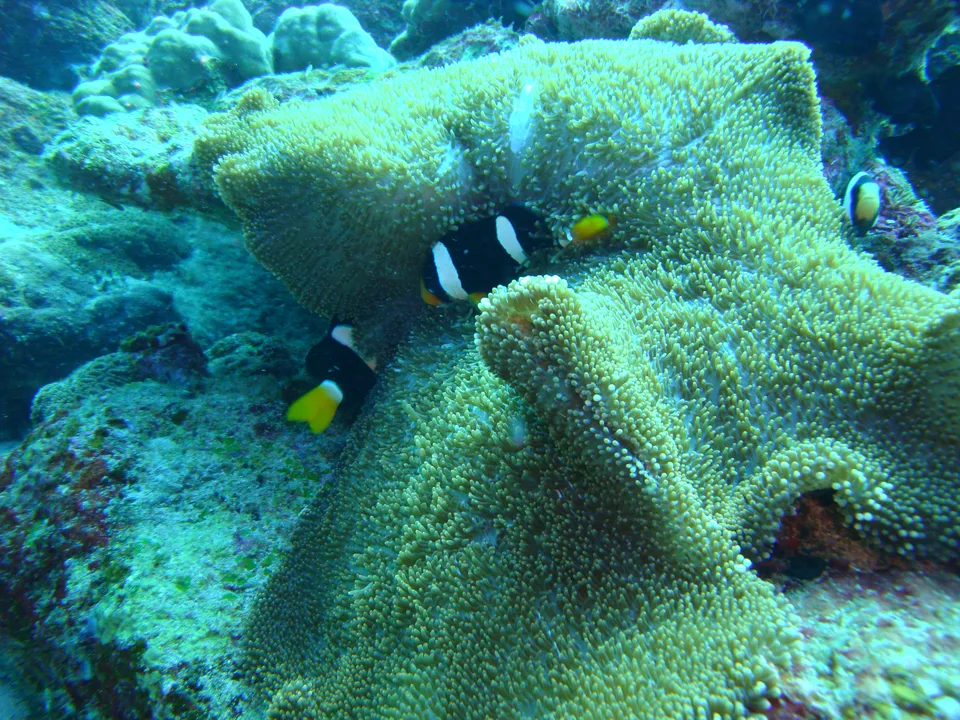
Diurnal and highly territorial around its host anemone. It lives in social groups with a size-based hierarchy, generally dominated by a large breeding female and a breeding male. It is a protandrous hermaphrodite: males can become females.
Observation zones
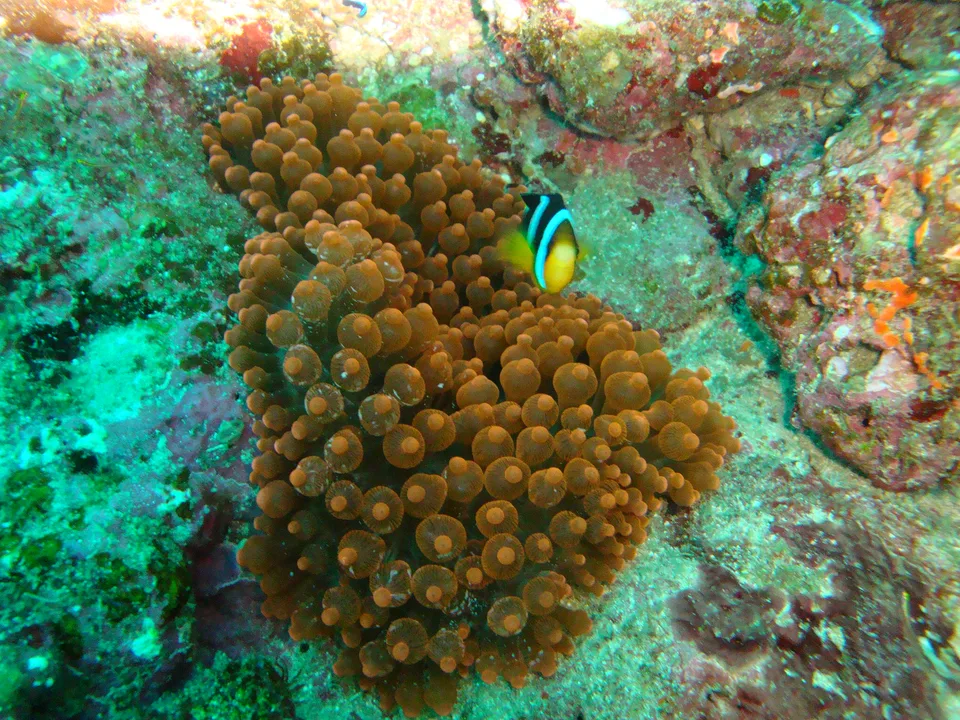
Coral reef, lagoon, reef slope, sheltered coastal reef and anemone habitat; generally absent from offshore areas, wrecks, caves and open sand.
Diet
Omnivore. Feeds mainly on zooplankton, small benthic crustaceans, algae and other small particles collected near the host anemone.
Reproduction
Oviparous
Identification marks
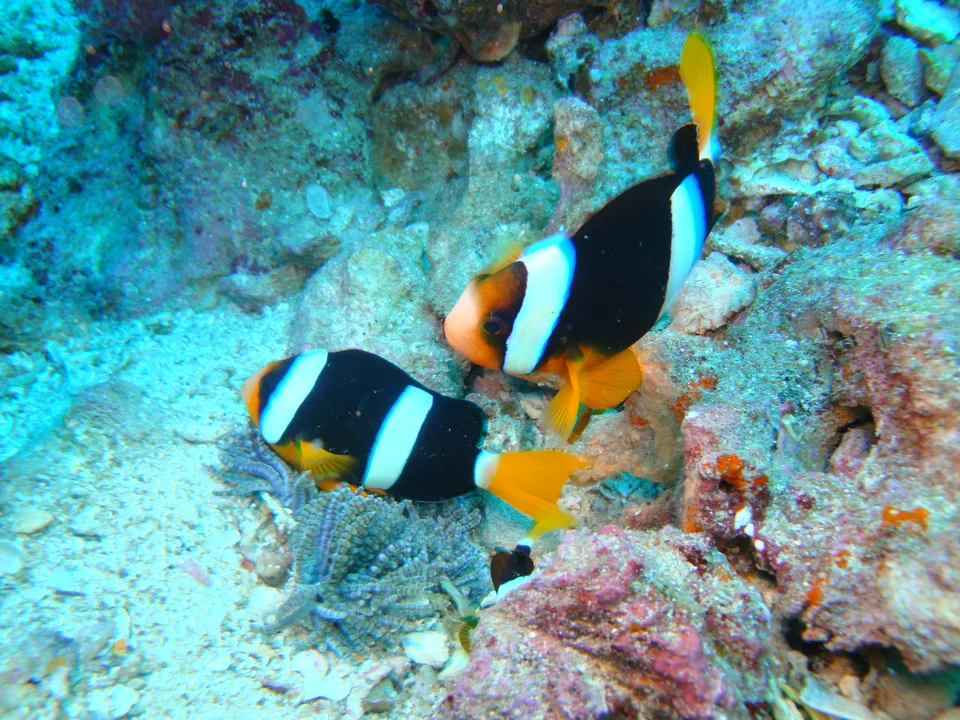
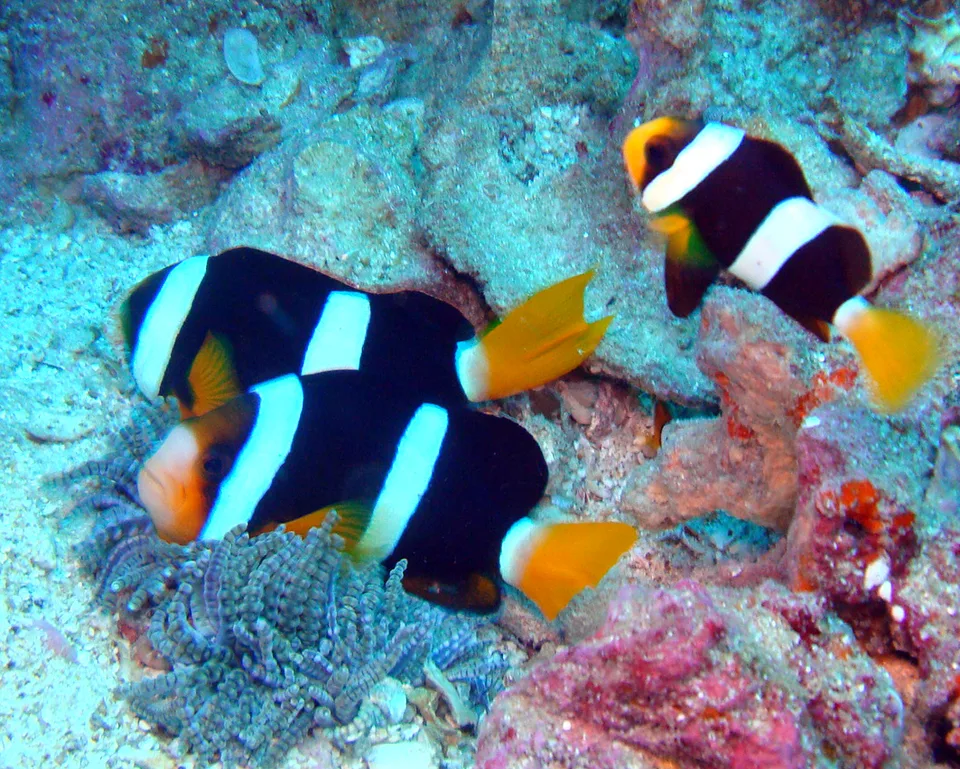
Clownfish with variable coloration, dark brown to almost black, with three clear white vertical bands: a broad head band, a median band and a band on the caudal peduncle. The tail is often yellow or white and the fins may be yellow-orange. Adults reach about 15 cm.
Similar species
Often confused with other three-banded clownfish, particularly Allard’s clownfish (Amphiprion allardi). A. clarkii is highly variable, but often has a broad head band and a yellow or white tail. It is distinguished from two-banded species, such as A. bicinctus and A. omanensis, by its third band on the caudal peduncle.
Approach rules
Approach slowly and, if possible, stay at least 1 to 2 m away. Do not touch, handle, or chase the fish, and do not block its access to its anemone. Avoid touching the anemone; do not feed wildlife. Use flash sparingly and never at very close range.
Protection
IUCN: Least Concern (LC). The species is not listed under CITES. Protect reefs and host anemones, and avoid collection or disturbance; local regulations may apply.