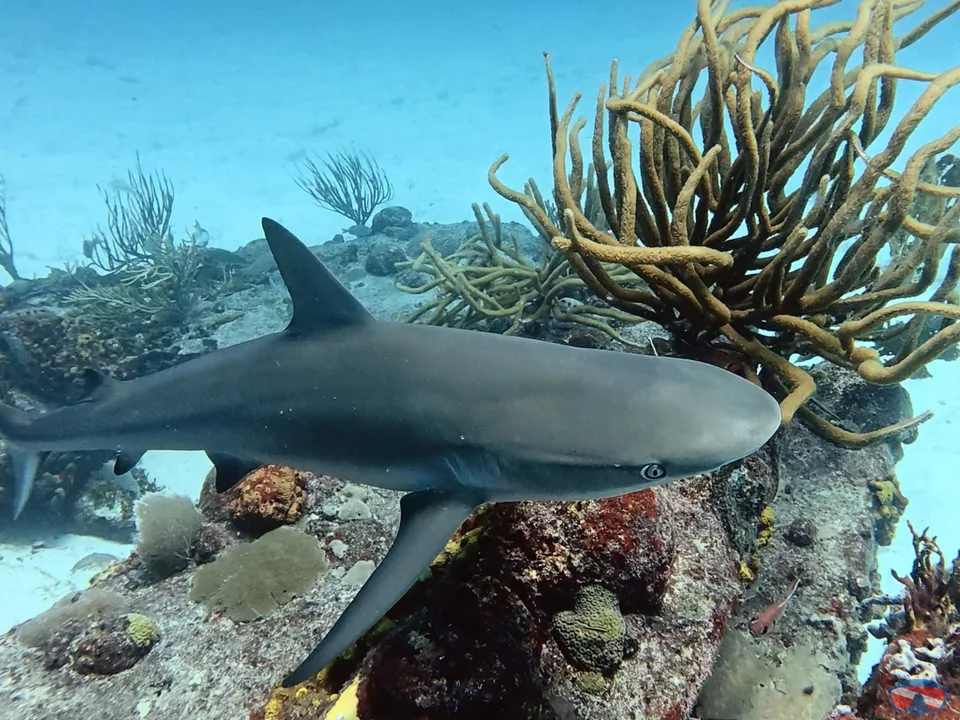
Tropical and subtropical marine waters, chiefly around coral reefs, reef slopes, channels, lagoons and outer reef drop-offs; juveniles may use shallow coastal habitats including mangroves.
Distribution
Western Atlantic: from the southeastern United States and Bermuda through the Gulf of Mexico, Caribbean Sea and Bahamas to Brazil.
Conservation status
Endangered
Edibility
Edible flesh, but consumption is not recommended because the species is Endangered and listed in CITES Appendix II; sharks can also accumulate mercury.
Culinary quality / 5
3
Danger level
Dangerous
Usual observation depth
0–30 m
Lifespan (years)
22
Behaviour
Usually solitary or in small loose groups, but may aggregate at reef sites. Active mainly by day and night, generally resident around reefs, inquisitive and sometimes assertive around food.
Observation zones
Reef slopes, reef walls and drop-offs, channels, passes, lagoons, sandy areas beside reefs, and occasionally wrecks; juveniles may occur near mangroves.
Diet
A generalist predator feeding mainly on bony fishes, including reef fishes, as well as rays, smaller sharks, cephalopods and crustaceans.
Reproduction
Viviparous
Identification marks
A robust grey-brown requiem shark with a pale underside, short broad rounded snout, large triangular first dorsal fin, and a long upper lobe on the tail. Fins may show dusky margins, but lack the sharply contrasting black tips typical of blacktip sharks.
Similar species
May be confused with other Carcharhinus sharks. Blacktip sharks have conspicuous black fin tips; sandbar sharks have a much taller first dorsal fin. Accurate identification may require location, fin proportions and close inspection.
Approach rules
Observe calmly from a respectful distance; do not block its path, chase, touch or corner it. Stay with a group, maintain awareness of other sharks, avoid flash where it could disturb the animal, and never feed or use bait while recreational diving.
Protection
IUCN Red List: Endangered (EN). Listed in CITES Appendix II. International trade is regulated; consult applicable national and local conservation measures.