Pelagic and oceanic species living in offshore waters. It regularly performs deep dives to feed but may also be observed near the surface.
Distribution
Circumglobal distribution in tropical, subtropical and temperate oceans, excluding polar regions.
Conservation status
Not Evaluated
Edibility
Edible and consumed in some regions, but consumption should be avoided because this species is Vulnerable and may accumulate contaminants. Do not consume animals of uncertain origin.
Culinary quality / 5
3
Danger level
Caution
Usual observation depth
?–200 m
Behaviour
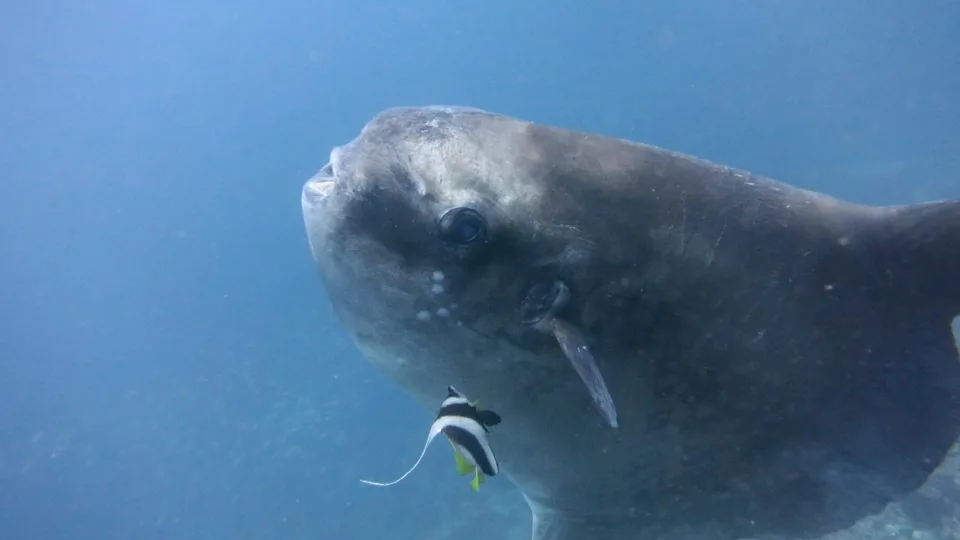
Generally solitary. It makes extensive vertical movements between surface waters and deep layers, probably to feed and regulate its temperature. Individuals may warm themselves near the surface and visit cleaning stations.
Primarily gelatinous zooplankton, notably jellyfish and salps, supplemented by other invertebrates, small fish, and squid.
Reproduction
Oviparous
Identification marks
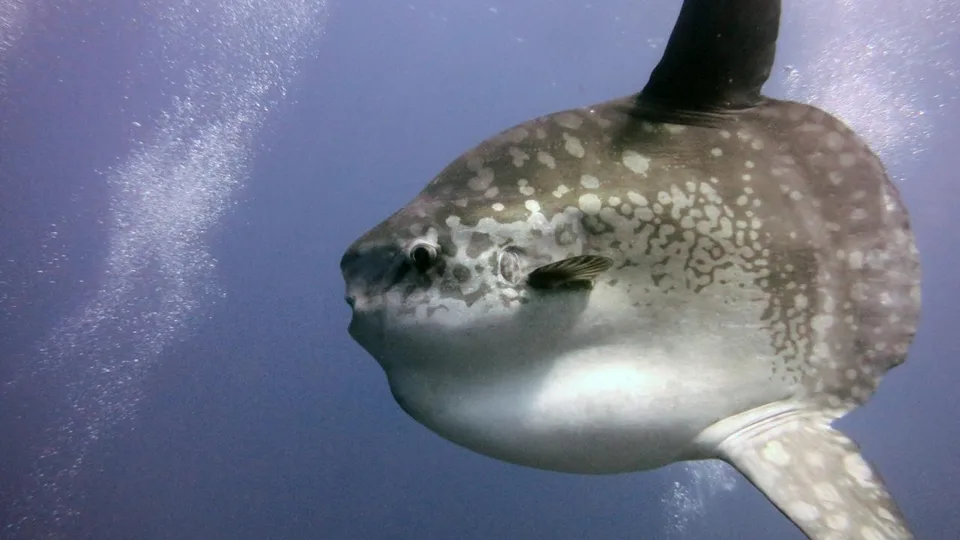
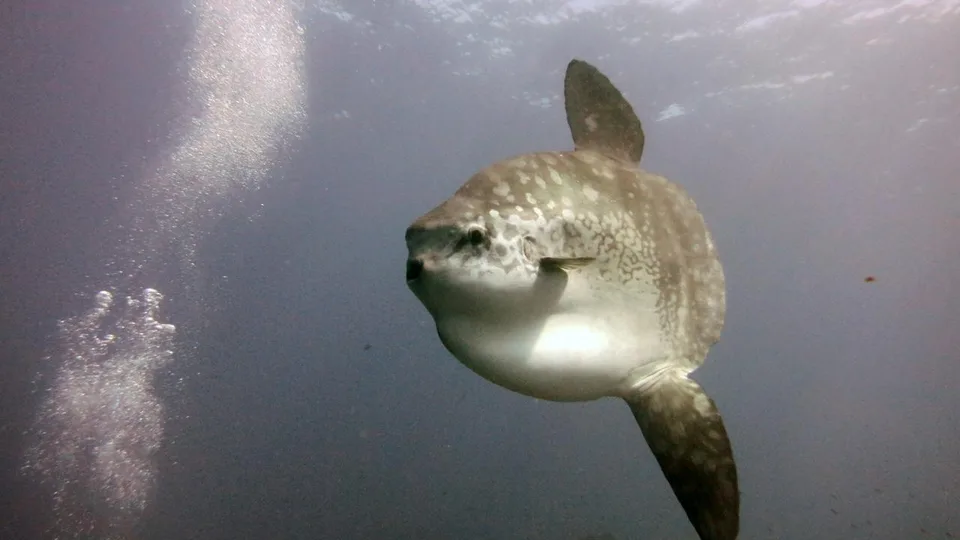
Enormous body, laterally compressed and almost circular, without a true tail; a fin-shaped clavus replaces the tail. It has long dorsal and anal fins, a pronounced bump above the mouth, and a band of scales separating the body from the clavus.
Similar species
Often confused with the common sunfish, Mola mola, and the hoodwinker sunfish, Mola tecta. M. alexandrini is distinguished by a pronounced cranial bump and a band of scales separating the body from the clavus; reliable identification may require close-up photographs or expert advice.
Approach rules
Observe calmly from at least 3 m away. Do not touch it, ride it, chase it, block its path, use flash, or feed it. Give more space around cleaning stations and avoid sudden movements; this large fish can cause accidental injuries.
Protection
Classed as Vulnerable globally on the IUCN Red List. Avoid disturbance, bycatch and consumption; protection and fishing regulations vary by jurisdiction.