Edible, but consumption is discouraged: this threatened shark may accumulate mercury and other contaminants, especially large individuals. Choose sustainable, locally advised alternatives.
Culinary quality / 5
3
Danger level
Dangerous
Usual observation depth
?–30 m
Lifespan (years)
32
Behaviour
Generally solitary or observed in small, loosely structured groups. Active and opportunistic predator, potentially more active at dusk and at night. Juveniles frequently use estuaries and shallow rivers as nurseries.
Observation zones
Shallow coastal waters, sandy bottoms, channels, river mouths, estuaries, mangroves, lagoons and, occasionally, reefs or open water near the coast.
Diet
Highly varied opportunistic diet including bony fish, other sharks and rays, crustaceans, cephalopods, sea turtles, marine mammals, seabirds and carrion. Diet varies according to size and habitat.
Reproduction
Viviparous
Identification marks
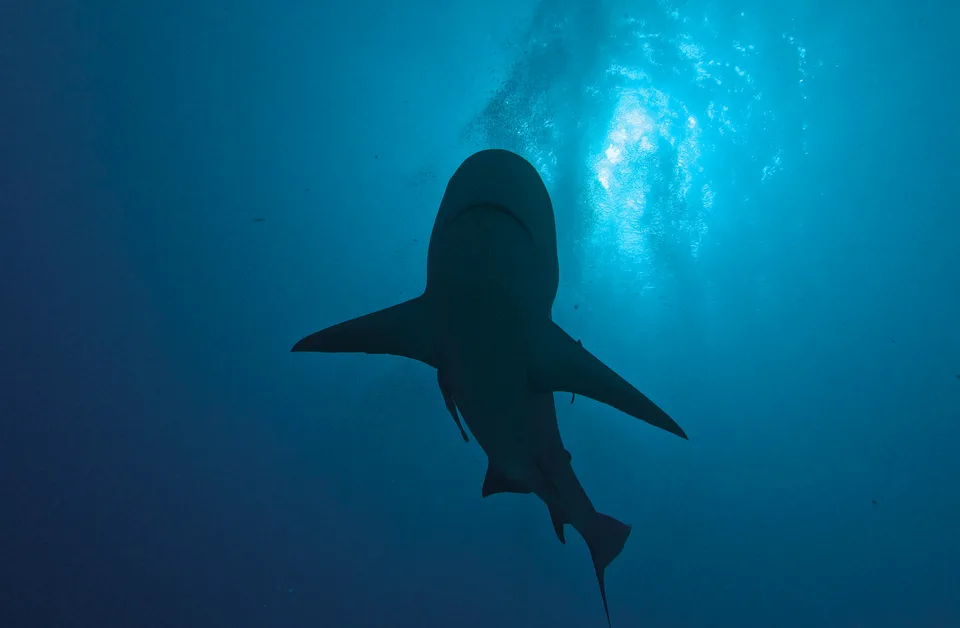
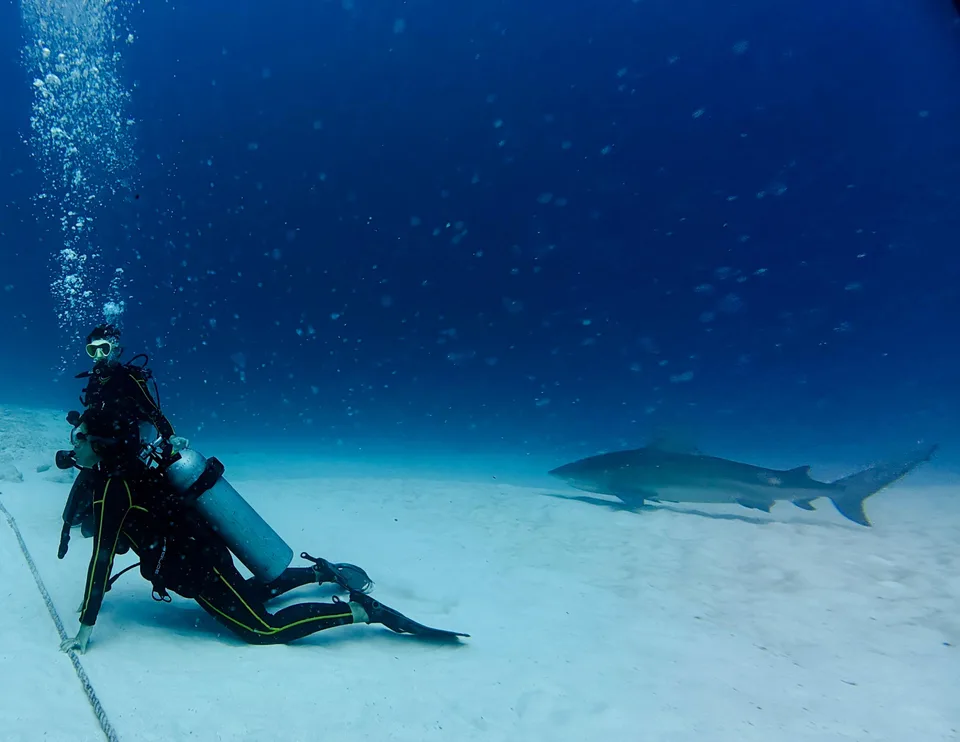
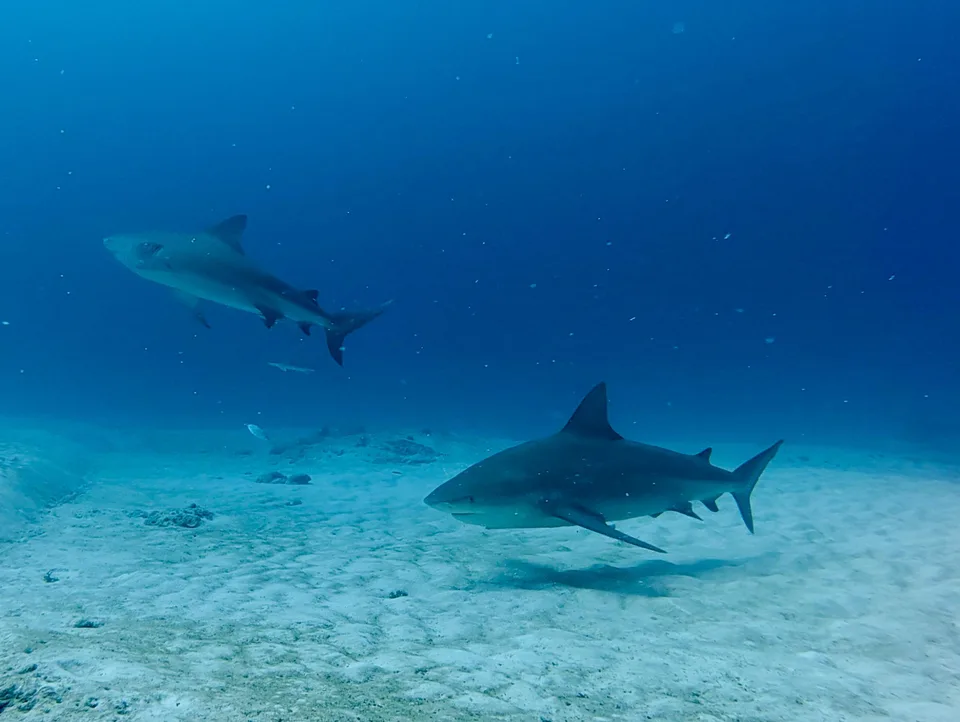
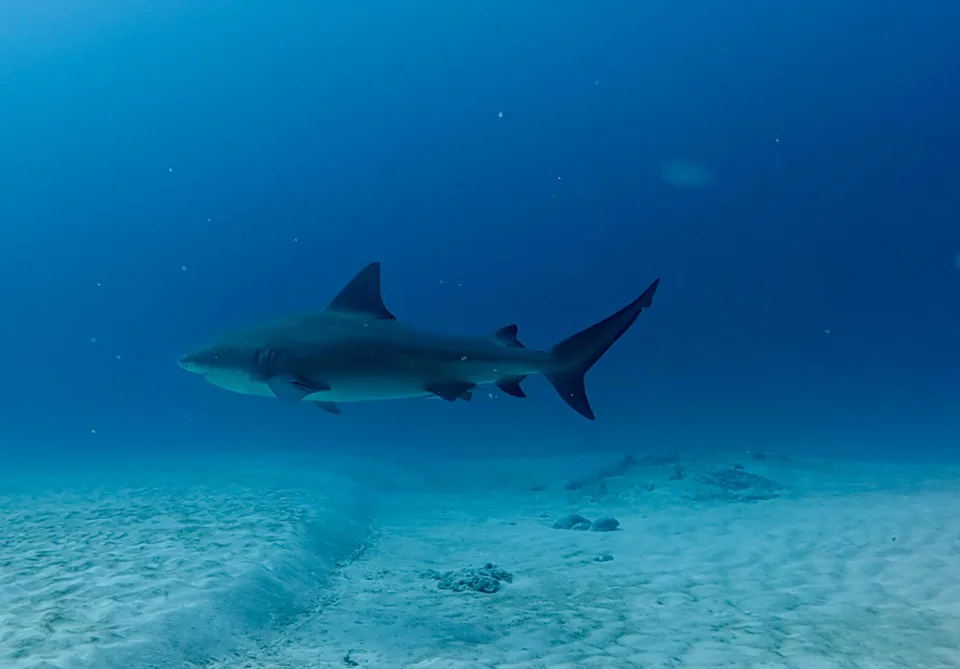
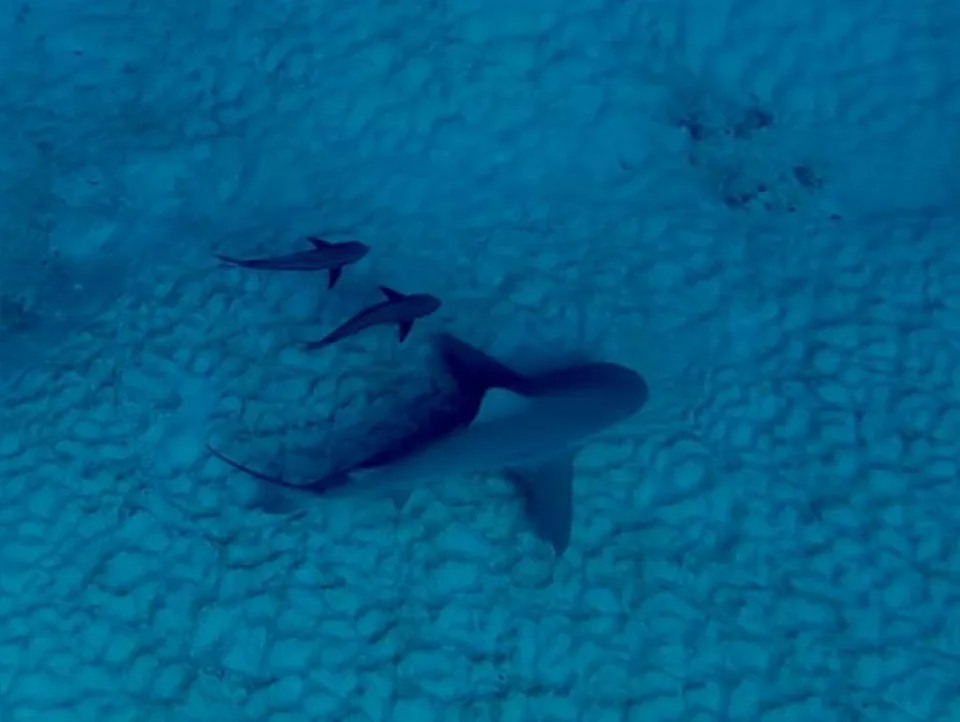
Stocky and robust shark with a very short, broad and rounded snout; small eyes; grey to greyish-brown back and white belly; first dorsal fin broad and triangular; second dorsal fin relatively small; absence of distinct markings on the fin tips in adults.
Similar species
Often confused with the tiger shark, the Galápagos shark and other Carcharhinus. The tiger shark has dark vertical bars or spots and a more characteristic head profile. The Galápagos shark generally has a less blunt snout and more visible dark fin margins. Reliable identification may require examination of fin and tooth proportions.
Approach rules
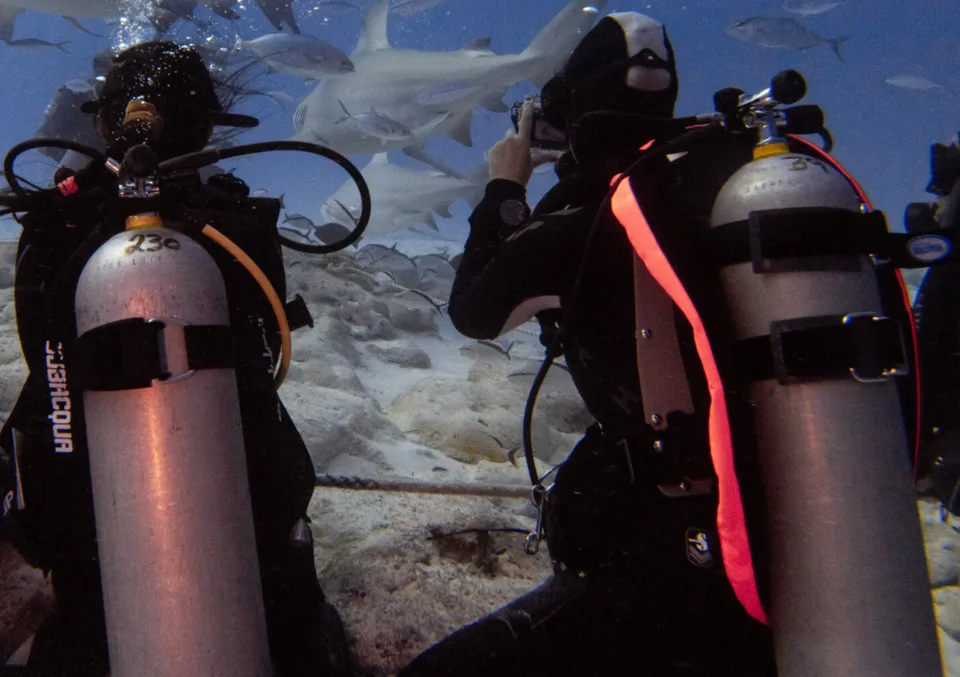
Treat it as a large, potentially dangerous shark. Do not enter the water in the presence of baiting, fishing activity, low visibility or outflow at a river mouth. Remain calm, upright and facing the animal, stay together, keep a large distance, never block its path or corner it; leave the water if its behavior becomes persistent or agitated. Do not touch it, feed it, pursue it, use flash at close range or approach it alone.
Protection
Globally assessed as Vulnerable on the IUCN Red List. Listed in CITES Appendix II; international trade is regulated to help ensure its legality and sustainability.