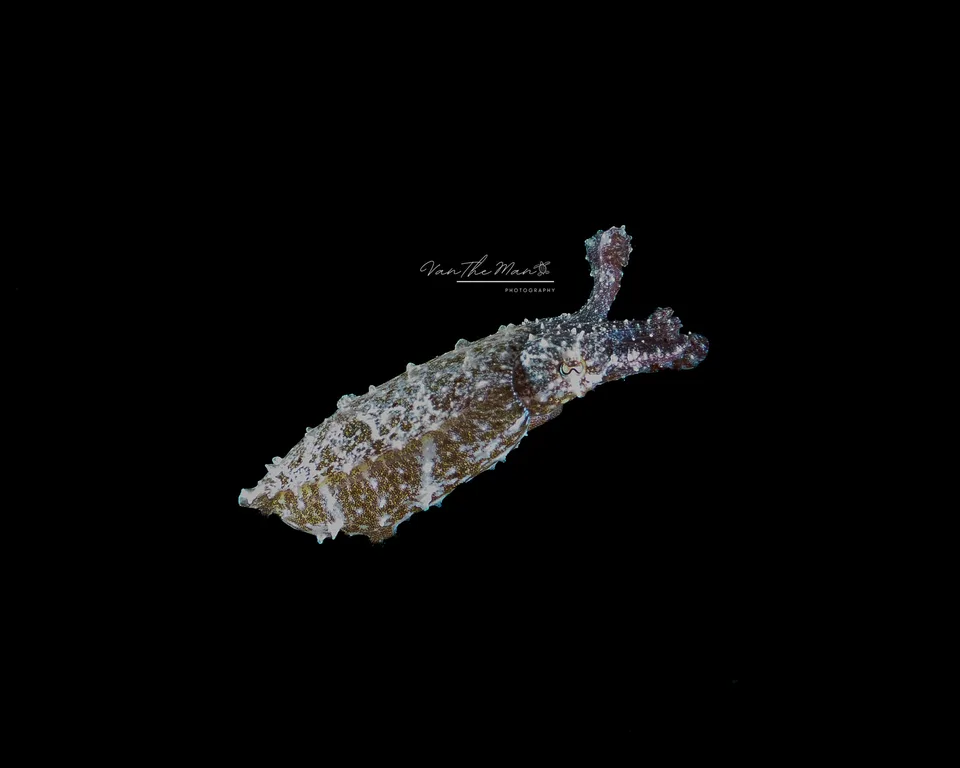
Shallow coastal waters, often found in sandy or muddy substrates.
Distribution
Found in the Indo-Pacific region, including areas around Australia, Southeast Asia, and the western Pacific.
Conservation status
Least Concern
Edibility
Edible and valued as seafood; it may be prepared similarly to other cuttlefish. Consume only when legally and responsibly sourced, and cook thoroughly.
Culinary quality / 5
4
Danger level
Harmless
Usual observation depth
3–20 m
Lifespan (years)
2
Behaviour
Generally solitary and highly visual. It is mainly active during the day and at dusk, hunting from its camouflage; it can rapidly change its color and skin texture, release ink if threatened, and gather seasonally for reproduction.
Active predator of crustaceans, small fish and other cephalopods. It captures its prey with two extensible feeding tentacles and bites them with its beak.
Reproduction
Oviparous
Identification marks
Very large, robust cuttlefish, with an oval mantle and a continuous fin along the mantle edge, eight arms, and two feeding tentacles whose clubs are particularly broad. Colouration and patterns are highly variable, ranging from pale marbling to dark bands and disruptive patterns.
Similar species
It can be confused with other large Indo-Pacific Sepia, notably members of the Sepia pharaonis complex. Color alone is not reliable; the broad tentacular clubs are useful, but certain identification may require specialized examination of the suckers on the arms and clubs.
Approach rules
Approach slowly, staying low and calm; keep several meters away and leave the animal an escape route. Do not touch it, pursue it, corner it, feed it, or handle it. Avoid flash photography, especially repeated flashes, and move away if it charges, raises its skin, suddenly departs, or releases ink.
Protection
Globally assessed as Least Concern on the IUCN Red List. It is not listed under CITES. Fishing and collection regulations may vary by location; avoid disturbing it and prioritize responsible sourcing.