Edible and generally regarded as good food fish. As with other tropical reef fish, ciguatera poisoning is possible in some locations; consume only fish from reliable local sources.
Culinary quality / 5
4
Danger level
Harmless
Usual observation depth
5–50 m
Lifespan (years)
11
Behaviour
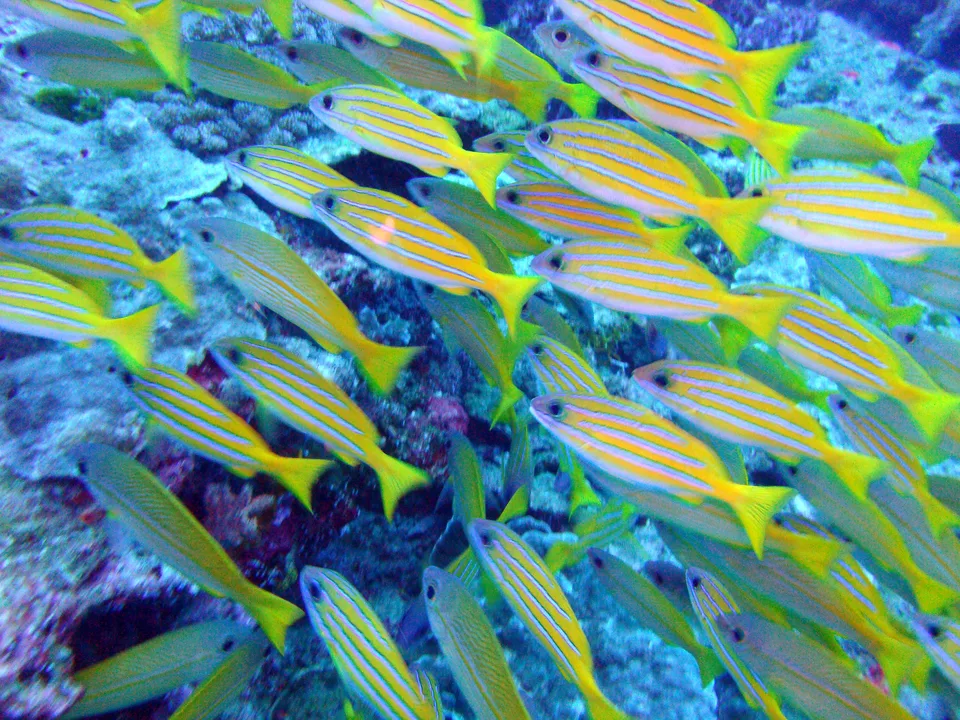
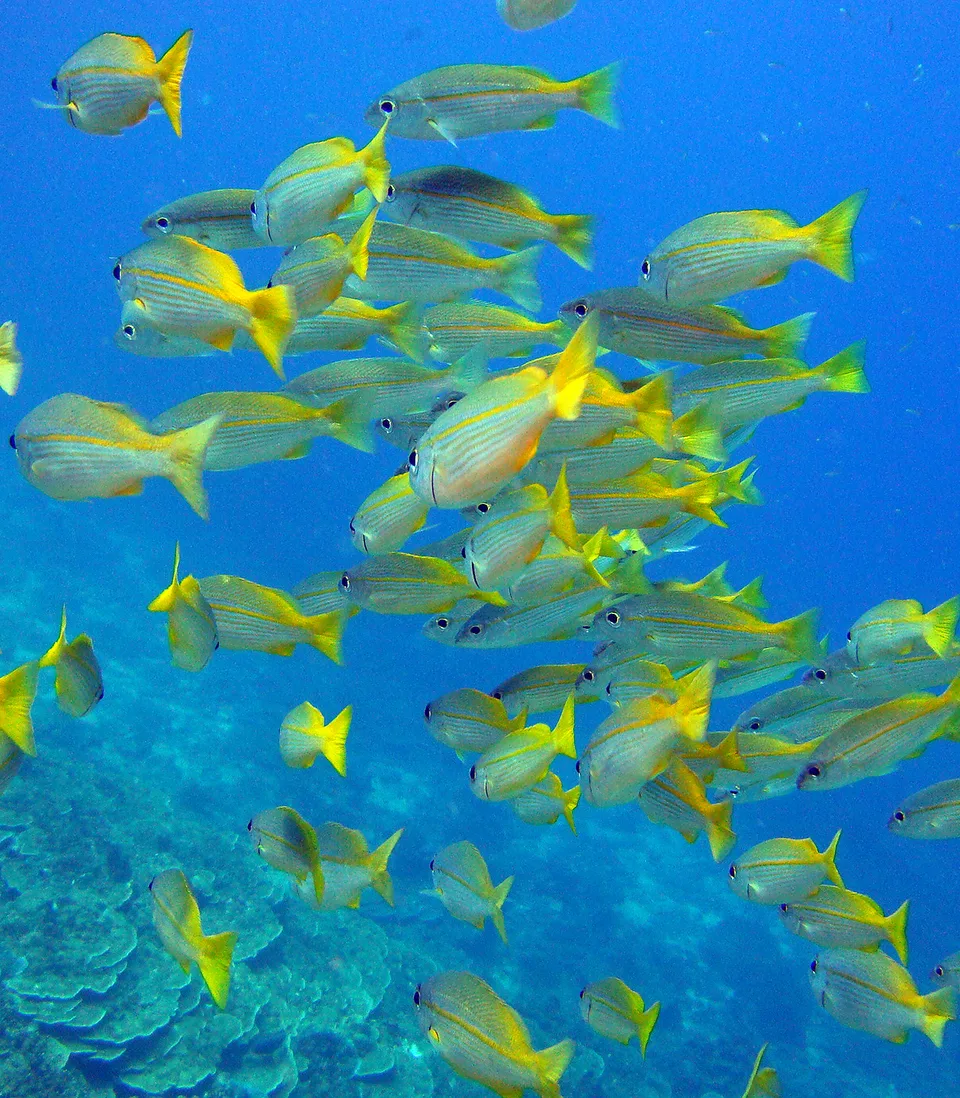
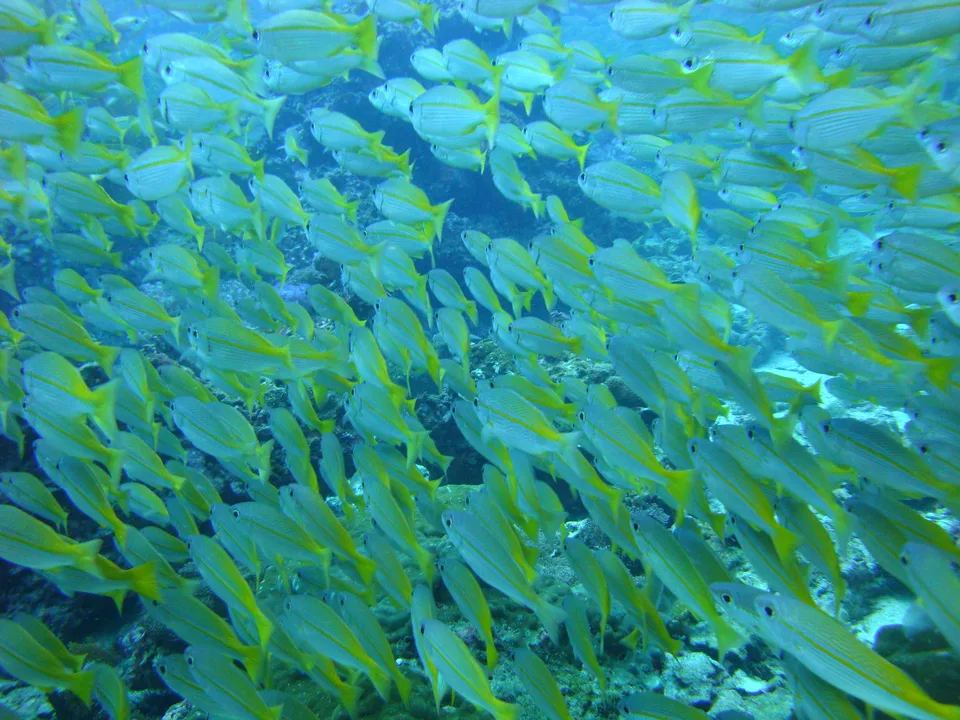
Generally forms large schools, sometimes mixed with other species, around reefs. It shelters near reef structures during the day and actively forages for food at dusk and at night.
Observation zones
Coral reef, rocky reef, lagoon, reef slope, sheltered bay and occasionally artificial reef or wreck.
Diet
Feeds mainly on small fish and crustaceans; it may also consume other small benthic and planktonic invertebrates.
Reproduction
Oviparous
Identification marks
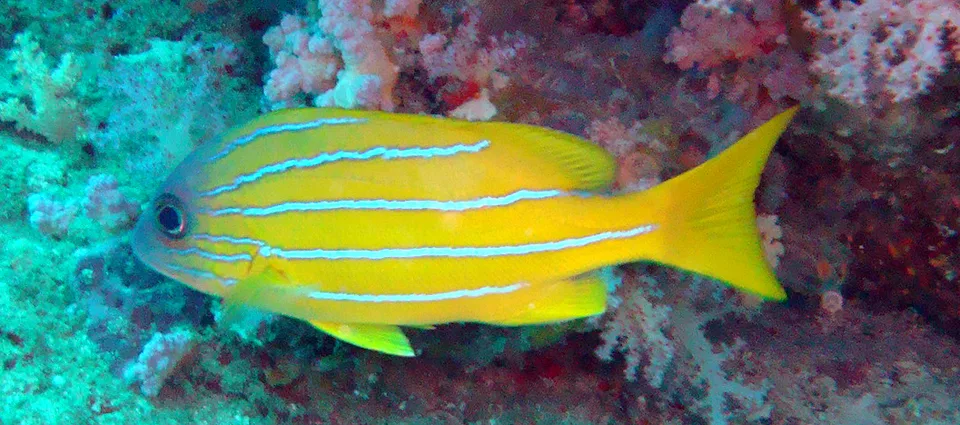
Bright yellow body bearing four clearly visible electric-blue horizontal bands, starting at the head and running along the flanks; yellow fins and a tall, laterally compressed body, typical of snappers.
Similar species
May be confused with other blue-lined snappers, notably Lutjanus bengalensis. Check the four characteristic broad longitudinal blue bands on the bright yellow body, body proportions, and location; colors may vary with age and lighting.
Approach rules
Approach slowly and calmly without blocking its retreat path to shelter. Keep a respectful distance, avoid touching the reef habitat, use flash sparingly, and never feed the fish.
Protection
IUCN: Least Concern (LC). Not listed in the CITES Appendices. Applicable fishing and collection regulations are established by local authorities.