Found in the tropical and subtropical waters of the Atlantic Ocean.
Conservation status
Least Concern
Edibility
A good food fish, but large reef individuals can carry a ciguatera risk in some regions. Eat only fish from a safe source and with reliable identification.
Culinary quality / 5
3
Danger level
Harmless
Usual observation depth
3–50 m
Lifespan (years)
11
Behaviour
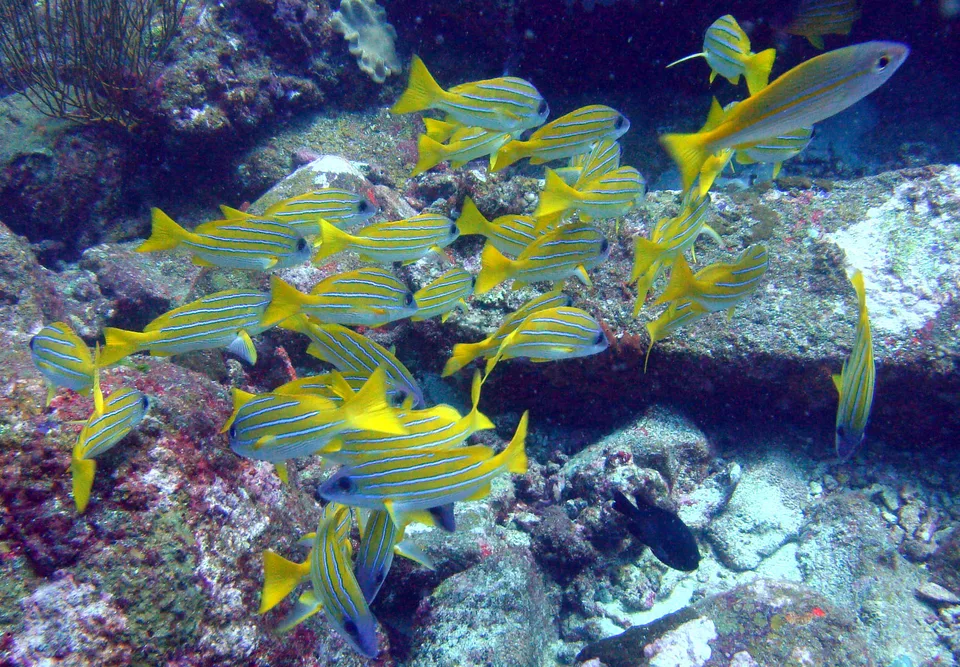
Gregarious, often forming large daytime schools close to the reef. It rests in crevices and becomes more active, especially while feeding, at dusk and at night.
Observation zones
Reef, lagoon, reef slope, drop-off, overhangs and crevices.
Diet
Carnivorous predator feeding mainly on small fishes, crustaceans, cephalopods and other benthic invertebrates.
Reproduction
Oviparous
Identification marks
Bright yellow to golden-yellow body with four vivid blue horizontal stripes along the sides. Fins are generally yellowish; body shape is robust and typical of snappers.
Similar species
It can be confused with other striped yellow snappers, especially the Bengal snapper (Lutjanus bengalensis). L. kasmira is best recognized by its four clear, continuous vivid-blue stripes on a yellow background.
Approach rules
Approach slowly from the side and do not block the school's escape route. Keep a respectful distance, never touch or feed the fish, and avoid repeated close-range flash.
Protection
Listed as Least Concern (LC) by the IUCN. No known CITES listing; catch management and protective rules may vary by location.