Found in shallow coral reefs and rocky substrates.
Distribution
Indo-Pacific region, including areas around the Philippines and Indonesia.
Conservation status
Data Deficient
Edibility
Not edible. Like other chromodorid nudibranchs, it may contain defensive chemicals derived from its sponge diet and should not be handled or consumed.
Danger level
Caution
Usual observation depth
5–25 m
Behaviour
Generally solitary and active during the day. It crawls slowly over the reef in search of prey; several individuals may occasionally be observed together during mating. It lays ribbons of eggs.
Observation zones
Coral reef, reef slope, rubble zone, hard substrate covered with sponges and sheltered lagoonal reef.
Diet
Sponge specialist, consuming mainly certain demosponges. Defensive compounds from sponge prey may be retained for chemical protection.
Reproduction
Oviparous
Identification marks
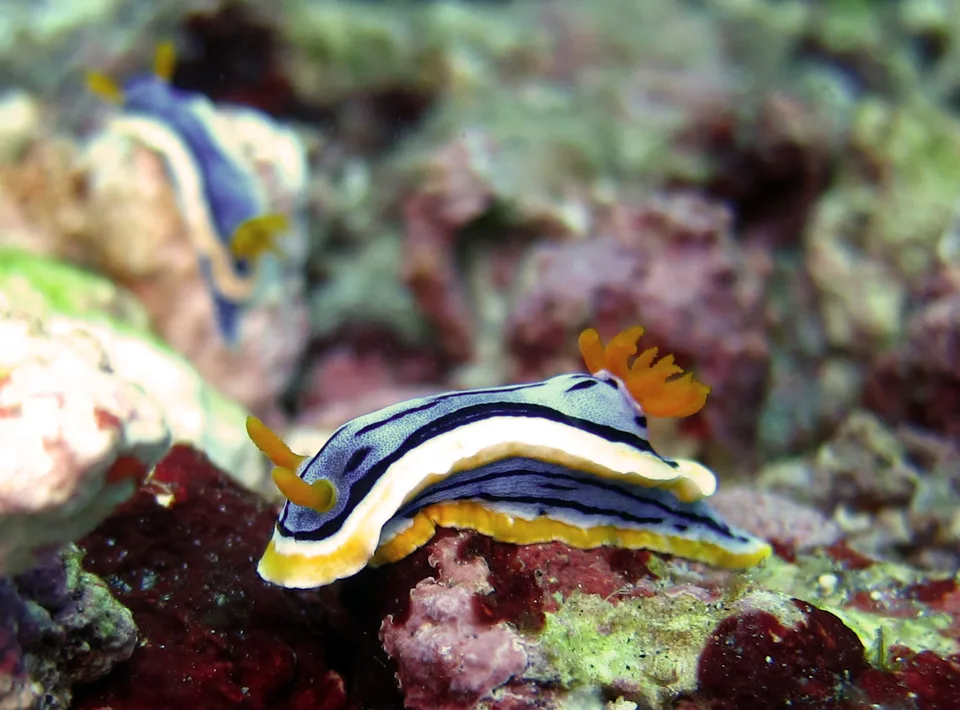
Mantle white to pale bluish, edged with orange, with strong longitudinal black lines and orange rhinophores and gills. The black lines form a characteristic network or interrupted striped pattern on the back.
Similar species
Often confused with other blue-and-white species of Goniobranchus, notably Goniobranchus elisabethina and Goniobranchus dianae. G. annae is recognized mainly by its orange mantle border, orange gills and rhinophores, combined with strong black dorsal lines; as the patterns may vary, photographs of the entire mantle are useful.
Approach rules
Observe without touching, collecting, moving, or feeding the animal. Maintain good buoyancy to avoid any contact with the reef. Photograph from a respectful distance; avoid repeated or very close flashes, especially at night.
Protection
Not listed under CITES and currently not assessed on the IUCN Red List under this scientific name. General recommendation: do not collect specimens and minimize disturbance and damage to the reef.